Self-Worth Is an Inside Job
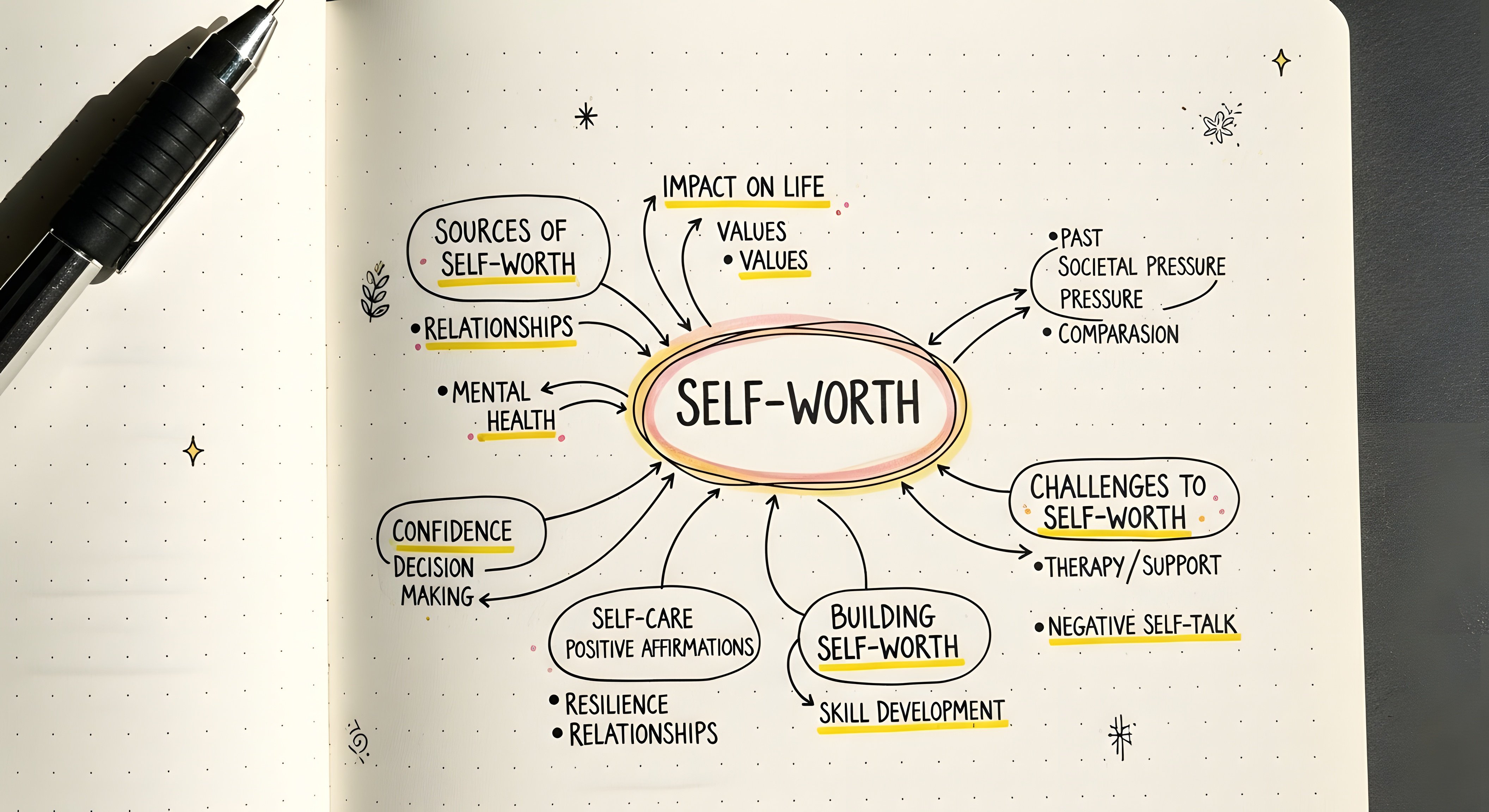
Self-esteem and self-worth aren't fixed. They rise and fall with the ordinary events of a life: a hard stretch with a spouse, a mistake at work, something we're genuinely proud of, a friendship that quietly fell apart. All of it moves the number up or down without asking permission first. The Self-Worth Journey Assessment maps that shifting sense of ourselves through twenty-four guideposts, grouped into self-respect, freedom from comparison and approval, authenticity in relationships, and emotional maturity. Four areas and twenty-four small check-ins might sound like a lot for something that usually just feels like "I'm having a good day about myself" or "I'm having a rough one," but that's really the point. Naming the pieces separately is what lets you see which ones actually need attention instead of lumping the whole thing into one vague mood.
Underneath all four areas is the same quiet correction: self-worth built on someone else's opinion is borrowed, and it gets called back the moment that person changes their mind. Praise feels wonderful, and a compliment from someone who matters to us can carry us through a rough afternoon, but neither one was ever built to hold the weight of our whole sense of self. The guideposts keep pointing back to the same simple test. Do I need recognition to feel good about myself, or does other people's opinion actually determine my value? What holds the weight instead is what we do on our own, whether that's keeping a commitment we made to ourselves, setting a boundary we've been avoiding, or getting to a meeting on a day we didn't feel like it.
Ups and Downs
Even a strong practice can get quiet in the wrong way. The assessment's own scoring says as much: land in the higher ranges and the guidance still reads "continue nurturing these qualities," not "you're finished." Old patterns of people-pleasing, comparison, or self-doubt can surface again even after years of steady self-respect, and that's not a step backward. It's just the next round of the same practice, the same one we've always used for serenity, applied here.
There's a particular kind of relief in measuring your worth by your own actions instead of someone else's outcomes. Two of the guideposts say this almost plainly: I can be happy even when someone I care about is struggling, and I don't feel responsible for making everyone else happy. A lot of us spent years quietly running someone else's life, convinced that if we managed enough, warned enough, and rescued enough, we'd finally feel okay about ourselves once they were okay. Their sobriety, their choices, and their recovery were never ours to earn credit for in the first place. Once self-worth stops depending on fixing someone else, the compulsion to manage them loses its fuel.
Where Are You Right Now?
The assessment is built around one more idea worth sitting with: your score is not a measure of your worth. That was never in question. A score just reflects how consistently you're living from that truth today, and the goal is growth, not a perfect number. You can download the Self-Worth Journey Assessment free at https://dave-h-recovery-yjayio.subscribepage.io and find out where you're already living from that truth and where you're still handing it to someone else.
Healthy self-worth isn't something any of us were born with. It develops over time, the same way the rest of recovery does, by replacing old beliefs with truer ones, one honest action at a time. You start where you actually are today, not where you wish you were, and you let the next right action do the work instead of waiting for the feeling to show up first. 🔳