You're Exhausted — And That Makes Sense
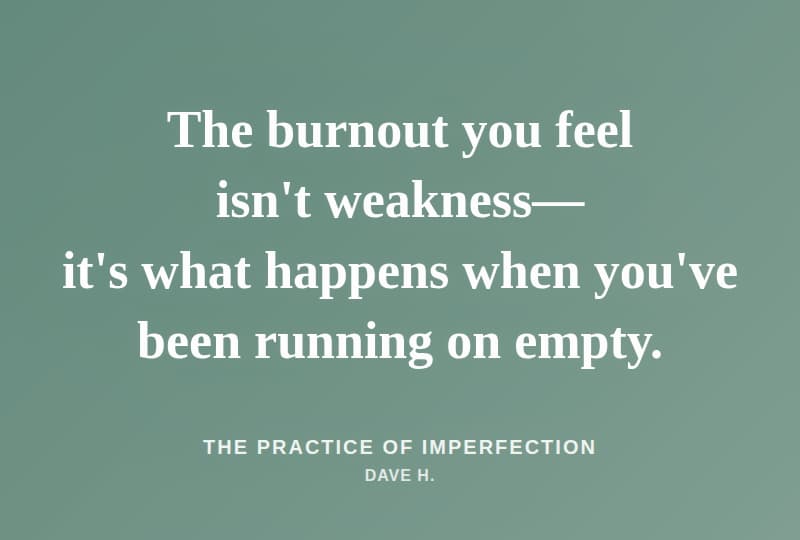
Living with addiction is exhausting. The burnout you feel isn't weakness. It's what happens when you try to do the impossible — keep someone else's tank full when you're running on empty.
Some of us learned as kids to keep huge stores of energy in reserve for all the rules that came with the family disease. Don't interrupt. Don't make mom mad. Stay out of the kitchen. Don't tell anyone.
As we got older, it took more and more to keep all the balls in the air, manage all the secrets, and deny the truth. Your mind has to track both reality and the secondary dimension the alcoholic is living in. Your body has to carry out its own functions for the day, plus whatever additional gymnastics are required to manage the mood, consequences, and perceptions of the addict. These additional activities become rituals.
The monitoring, the anticipating, the bracing for the next thing — all of it adds up.
Here's what most people don't realize: this exhaustion shows up whether your qualifier is actively using, white-knuckling early sobriety, in long-term recovery but still difficult to live with, or cycling between sobriety and relapse. Sobriety doesn't fix this overnight. The hypervigilance can disappear and reappear like hives. Your need for serenity doesn't depend on their sobriety status.
I know what it's like to believe that if you could just do more, manage better, stay two steps ahead — things would be okay. I thought I could control their emotions. It's a full-time job, that work.
And what ends up happening is the illusion of okayness only lasts so long before reality comes into focus. Your grip is always too tight or too loose.
The good news is that acknowledging your exhaustion — without judging it — is where relief begins. Not by working harder, but by asking a different question: what can I actually change?